TEDxGreatMills talk by Raven Baxter asks who gets to look like a scientist
After a 2019 event at a St. Mary's County high school, TEDxGreatMills went online and free in 2020, with seven speakers on the theme "Seeding the Future"
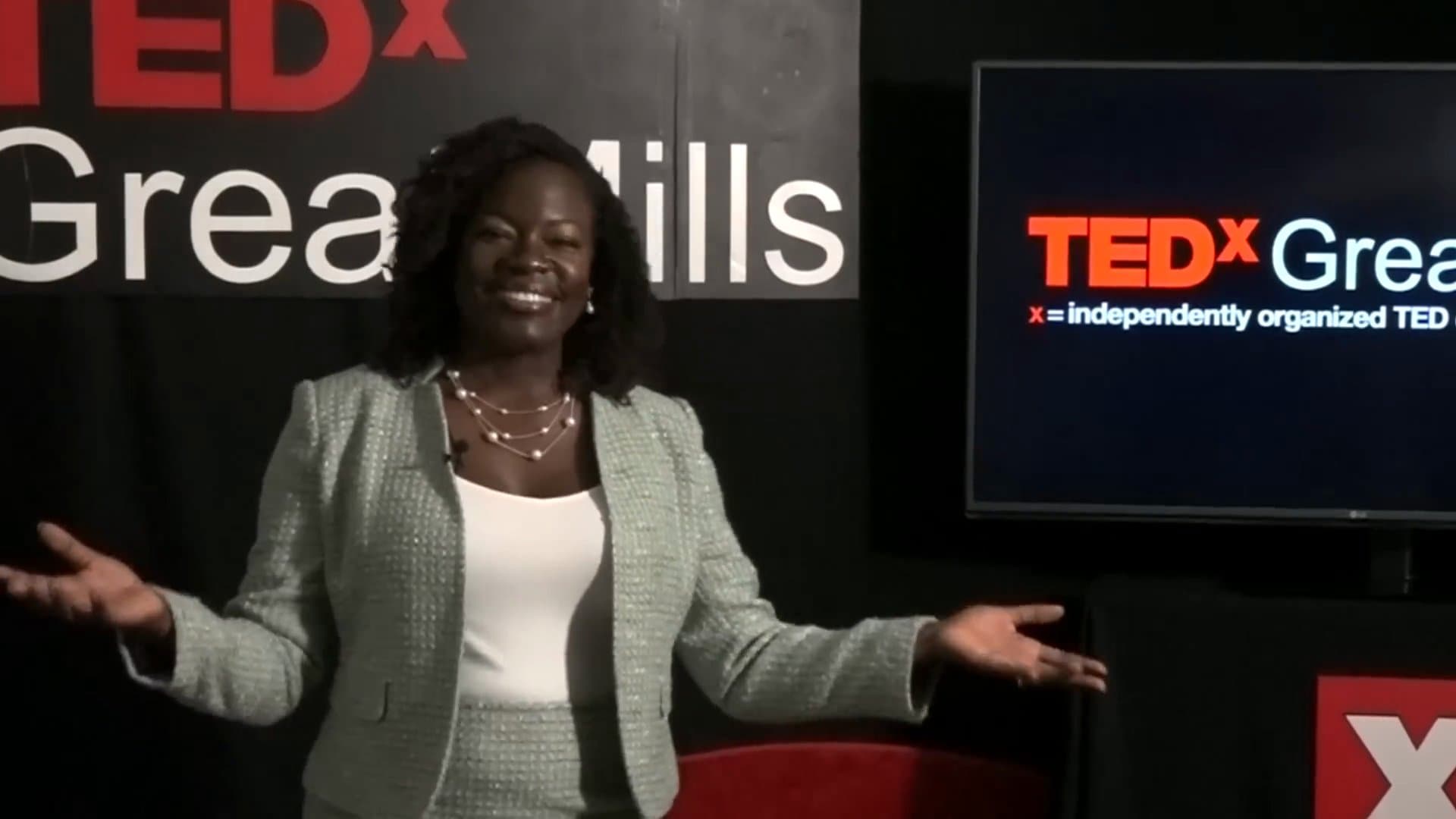
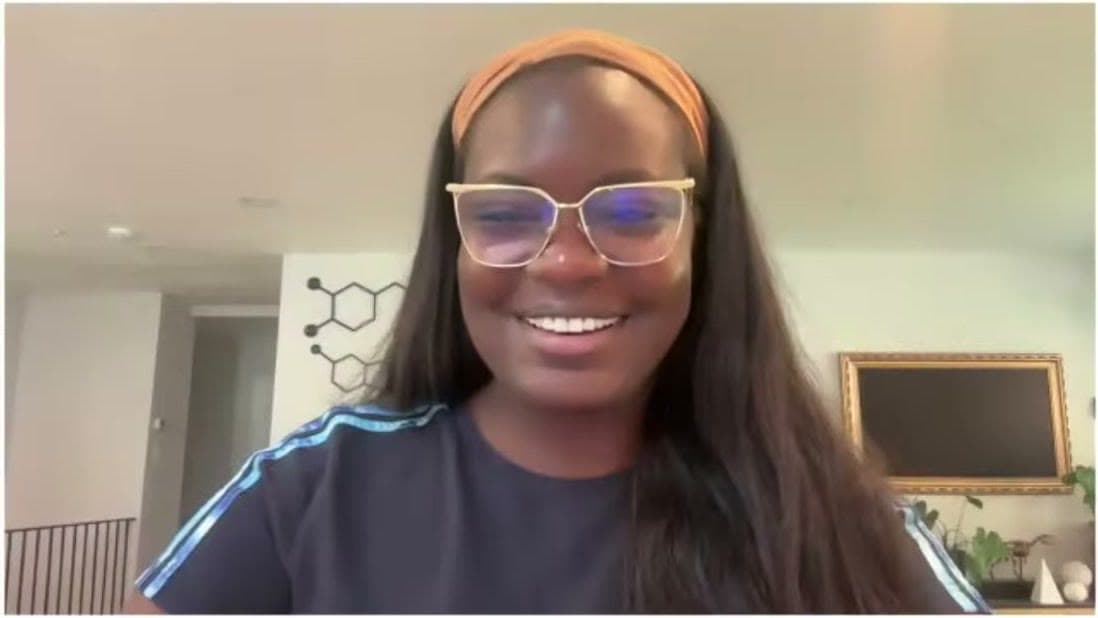
Baxter speaks during her 2020 TEDxGreatMills talk, "You Don't Look Like A Scientist!" Photo: TEDxGreatMills video
On Sept. 12, 2020, Raven Baxter spoke at Southern Maryland's TEDxGreatMills, held online that year with seven speakers. Her talk, "You Don't Look Like A Scientist!", was about changing the culture of science, technology, engineering and math (STEM).
Researchers have asked people to draw or describe a scientist for decades. "The most frequent response is that a scientist is a white man," Baxter said in the talk. "And I am not a white man. I am a Black woman."
Baxter was then a doctoral student at the University at Buffalo. Her talk went up on the TEDx Talks YouTube channel on Sept. 21.
The talk came at the end of a summer in which scientists confronted racism in their own fields. On June 10, thousands of people and institutions worldwide, including the journal Nature, joined #ShutDownSTEM, UBNow reported. The protest asked academics to spend the day acting against racism in science and higher education. After protests against police brutality, researchers used Twitter to hold events celebrating Black scientists, according to Thomas Jefferson University. One, Black in Neuro week, grew out of Black Birders Week and similar movements.
In a 2018 Pew Research Center survey, 62 percent of Black STEM workers said they had faced racial or ethnic discrimination at work. Forty-five percent said they had been treated as if they were not competent. Among white STEM workers, the figures were 13 percent and 3 percent.
Alone in a corporate lab
Baxter told viewers that as a corporate cancer researcher, she worked alone while colleagues formed friendships in the lab. "I also noticed that I was the only person who looked like me there," she said.
The lab eventually hired someone who looked like her, a janitor rather than a scientist. A coworker then told her, "You should be happy that you're not the token Black anymore," Baxter said.
She later taught science at a community college. "One of my coworkers decided that because I couldn't find my mailbox in the faculty mail room, that she was going to call the police on me and have me arrested," Baxter said. On her first day, she said, the coworker blocked her from the room and called her faculty ID fake.
She came to see a pattern, she said, and began a doctorate in science education. There she found decades of studies in which people most often drew or described a scientist as a white man. Studies of the media found the same image, she said. "But the issue becomes when these messages are perpetuated from the media into real life," Baxter said. In science workplaces, she said, colleagues "can't connect the dots and understand that I do belong and that I am a scientist."
A 2018 analysis of 78 Draw-A-Scientist studies found that in the 1960s and 1970s, under 1 percent of U.S. children's drawings showed a woman. From the 1980s on, the share rose to 28 percent.
Big Ole Geeks
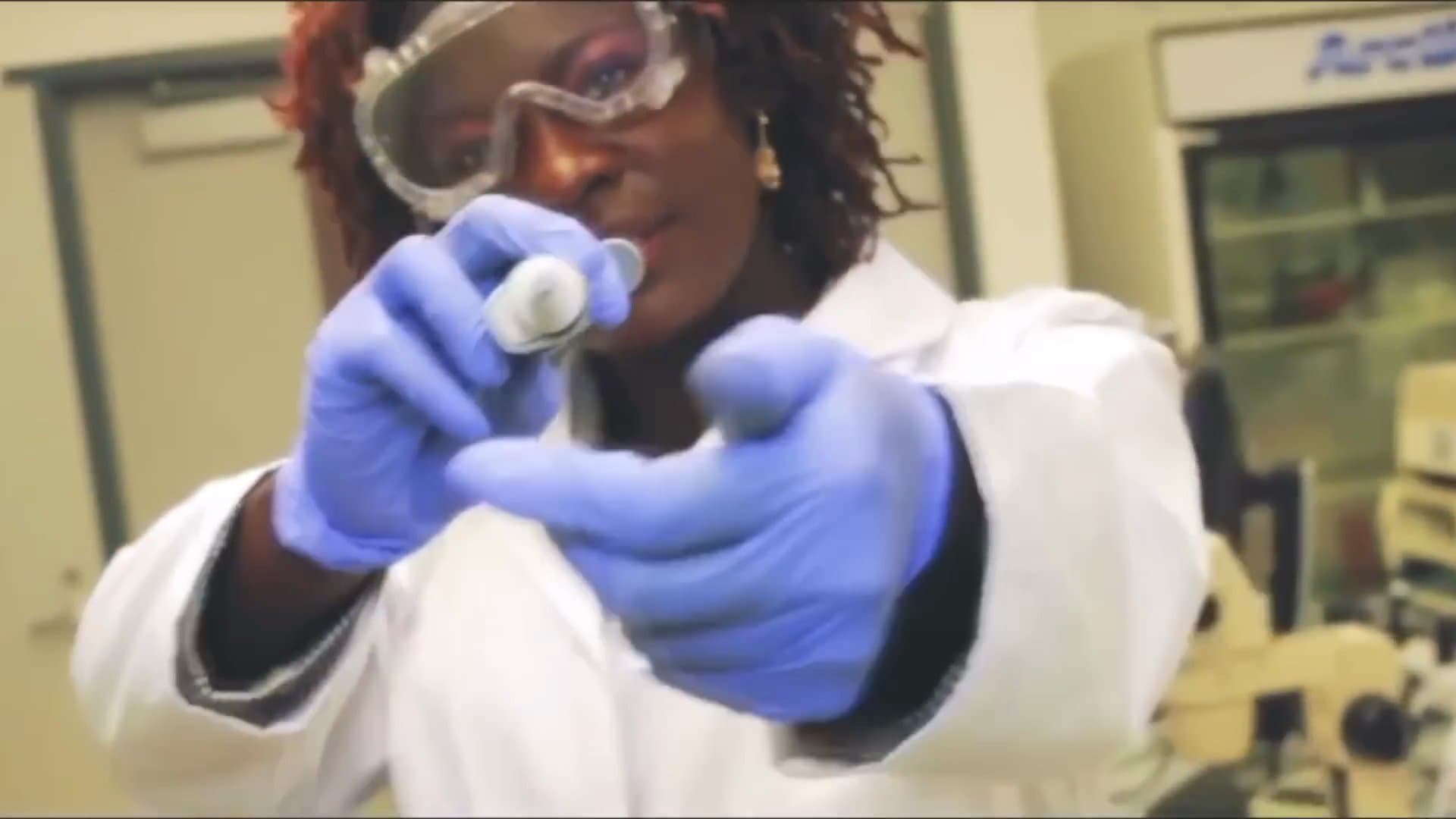
"I set out on a journey to redefine the image of a scientist and diversify that image," Baxter said. The result was "Big Ole Geeks," a 2019 science rap video she made with three friends.
A scene from Baxter's 2019 music video “Big Ole Geeks,” shown during the talk. Image: TEDxGreatMills video
She posted it online "hoping that it was not going to be the end of my career." Instead, she said, it got hundreds of thousands of views and messages of support.
Baxter said she centered her doctoral study on the video, collecting data from 50 Black women, half of them in STEM careers. "98 percent of my participants also said that the most common representation of a scientist in our country is of a white man," she said.
The women did not relate to that image, Baxter said, but they connected with her video. "They felt represented. They felt included. They felt seen," she said of the women in STEM. The women outside STEM said they "most likely would have pursued a STEM career if they had this type of representation."
Her dissertation, "Culturally Responsive Science Communication: The Messengers, Messages, and Voices in Communicating Science through Hip-Hop," is in the Education Resources Information Center.
Baxter closed by returning to her opening question. "What kind of boxes do you live in?" she asked. She urged viewers toward small daily acts, such as speaking up. Another was to say "that one thing that makes somebody just a little bit uncomfortable, which is the truth." A third was to wear the work-appropriate red dress from the back of the closet.
"I challenge you to get out of your box every day," she said.
Baxter closes by asking viewers to step out of their boxes every day. Image: TEDxGreatMills video
A community event moves online
TEDx events run independently under a free license from TED, and more than 4,000 take place each year, according to TED. TEDxGreatMills' 2019 event was an all-day program at Great Mills High School on March 23, according to a LexLeader preview.
For 2020, the organizers made tickets free. "The COVID-19 pandemic has taken a huge economic toll on our community," executive director Dr. Christine L. Bergmark said, according to the Southern Maryland Chronicle. She said the team hoped the theme would help "plant seeds of resilience, compassion, innovation, and hope for the future."
Baxter is a molecular biologist known online as the Science Maven. She earned her Ph.D. in curriculum, instruction and the science of learning from the University at Buffalo in 2022.
The talk runs about 14 minutes. It had about 48,000 views on YouTube by October 2026 and is also on TED.com. It became the basis of Baxter's keynote, "Take Up Space."
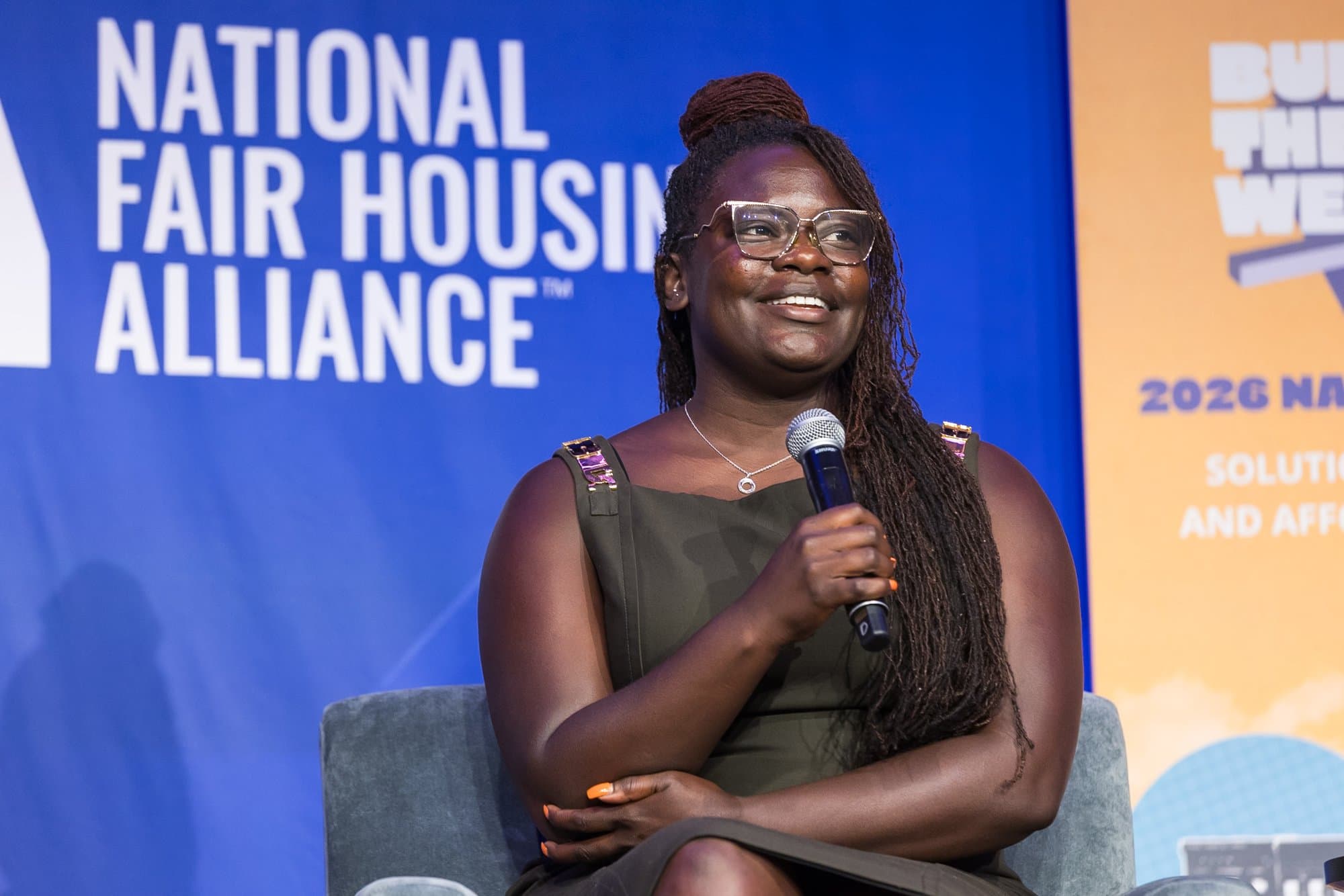
Dr. Raven Baxter joined National Fair Housing Alliance President and CEO Lisa Rice on June 28, 2026, for a fireside chat on housing discrimination at the alliance's national conference in Washington.
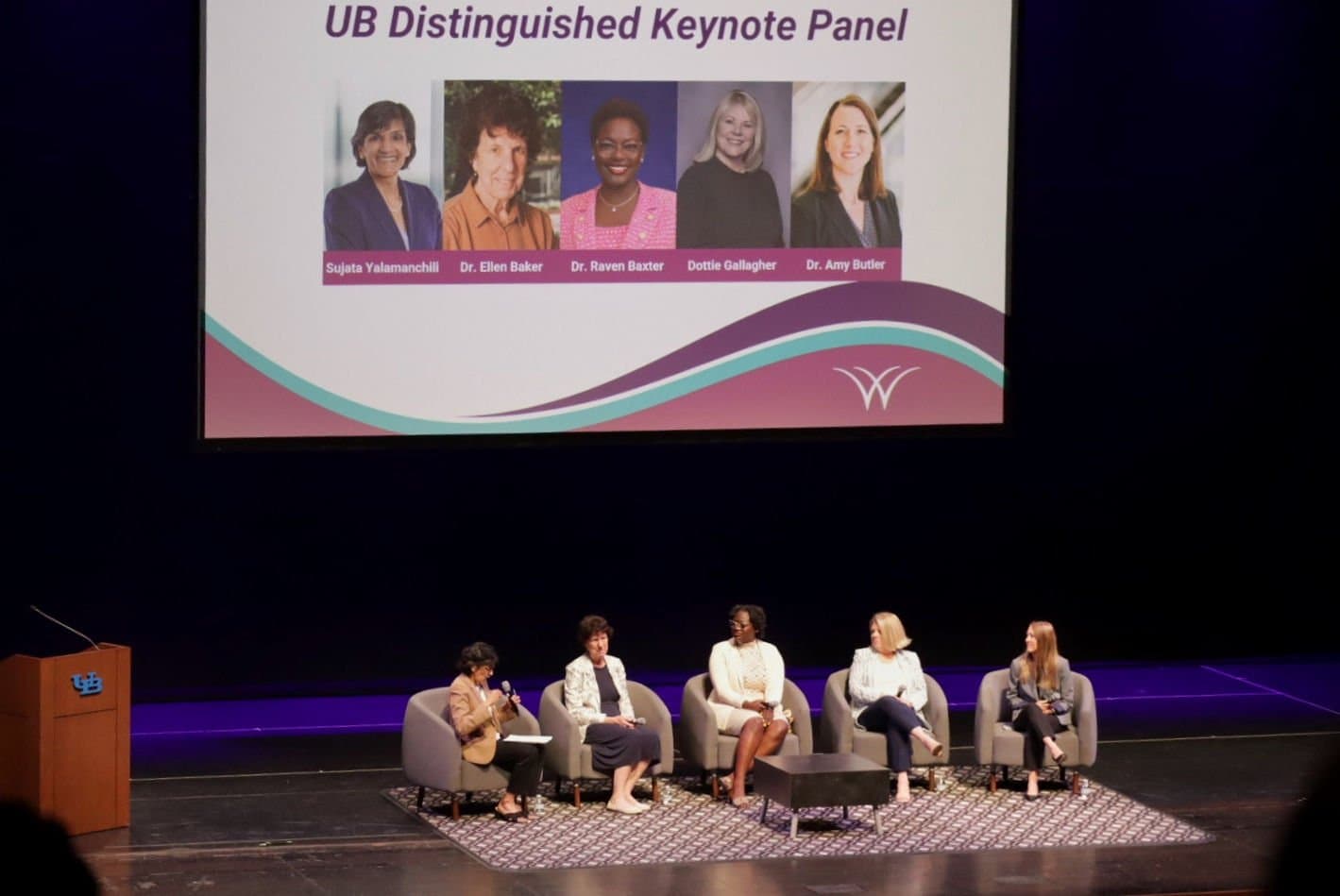
Dr. Raven Baxter joined three fellow University at Buffalo alumnae on the UB Distinguished Keynote Panel at the 4th Annual WNY Leadership Summit on May 29, 2026.